
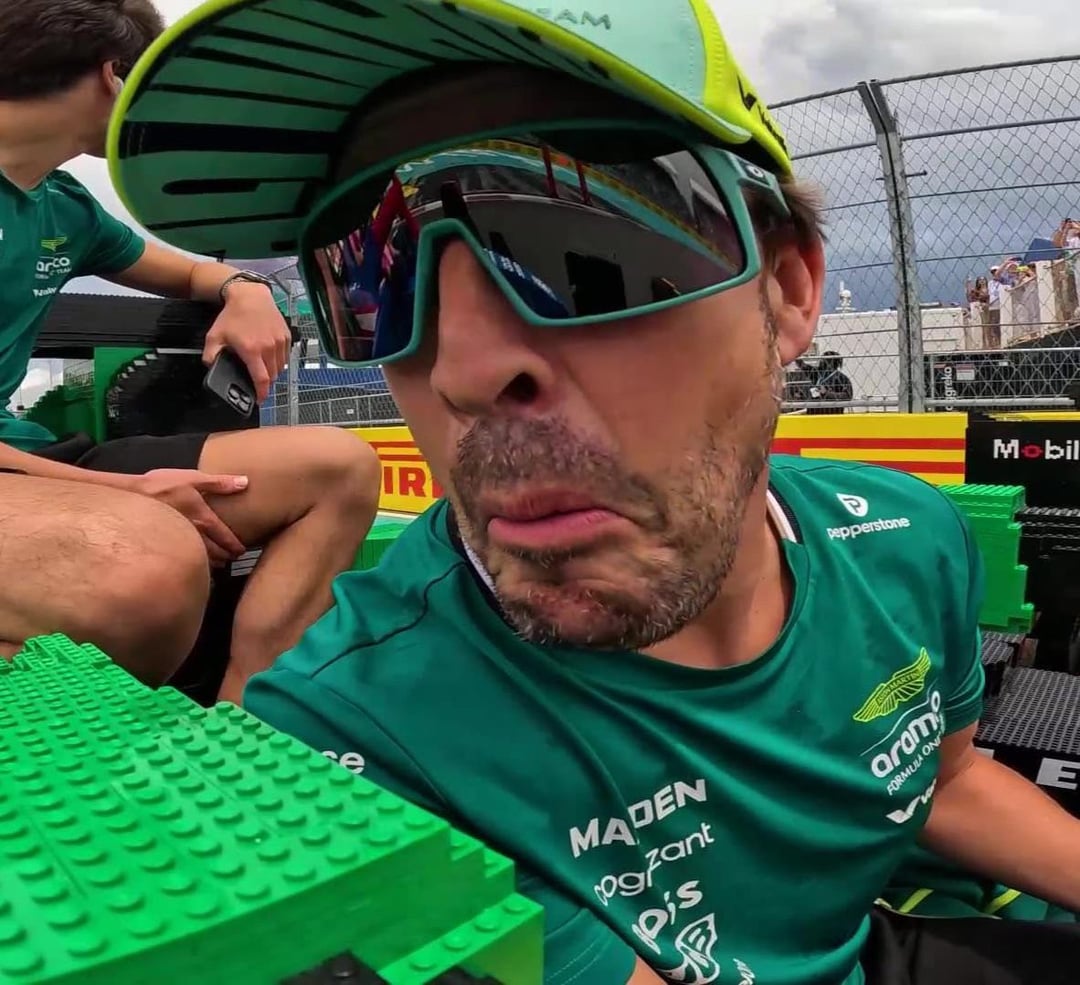
Honda knew before the 2026 season started that its Formula 1 comeback was in trouble. What it did not know was how much trouble.
Shintaro Orihara, Honda's trackside general manager and chief engineer, has set out the timeline in an interview with Motorsport.com, and the turning point was January — weeks before the cars ran in anger.
"So, probably at the end of last year, our position was not so bad," Orihara said. "Still, performance and drivability were in the development stage, but it looked okay. But in January, we realised that in some of the areas we found some, not issues, but we realised that performance was always up, down, up, down. So we found some performance, but then we also found some reliability issues."
Reliability won that argument, as it usually does. Honda pulled back several performance gains to make the power unit survive, and development slowed accordingly.
"In January, we realised that our performance and reliability would not be competitive," Orihara said. "When we started running in Barcelona, we realised that our performance was definitely poor compared to the other manufacturers. And also, we found some issues on the battery side."
Those battery problems cost track time in winter testing — the one commodity a manufacturer in catch-up mode cannot replace.
"So we realised that we were not in good position, maybe at beginning of this year," he added. "Last year, at end of last year, we already saw that we were not competitive, but we didn't expect it so bad."
"It's difficult to say which component of the power unit is most challenging because in this regulation, everything has changed a lot. For example, MGU-K power changed from, let's say, [120] to 350 kilowatts. That is a significant change. But also on the internal combustion engine side, we have changed the fuel flow rate."
He was more specific about the source of the drivability complaints that dogged Aston Martin's drivers through the opening rounds, along with the vibration issue that raised nerve-damage fears.
"Removing the MGU-H has also been quite challenging on the power unit side," Orihara said. "I have always been mentioning drivability. That is, maybe not mainly, but the majority of that is coming from removing the MGU-H."
Aston Martin's own view of the partnership is warmer than the results. Adrian Newey, speaking to media in Hungary after the team's 16-part B-spec upgrade put Fernando Alonso into Q2 for the first time this year, framed the wreckage as a bonding exercise.
"Out of what can only be called a disastrous start, the positive of that, because you're always looking for positives, is that it's brought Honda and ourselves, AMR, into a very close working relationship," Newey said. "Normally, if relationships improve, then performance also improves."
He was careful not to oversell what comes next at Zandvoort, where the upgraded Honda engine — worth a reported 30 horsepower — makes its race debut alongside further chassis revisions.
"We're clearly playing a big catch-up game. Is it going to make us the quickest car? Unfortunately, not. But does it represent a good step forward from where we were? Yes, I believe it does."
Honda Racing Corporation president Koji Watanabe went further in the other direction, warning that Hungary flattered the package. Speaking to as-web.jp, he put the Hungaroring result down partly to "the characteristics" of a chassis-dominant circuit that followed the high-speed Silverstone and Spa rounds — the two venues where Honda's power deficit was most exposed.
Watanabe did say the alliance is "steadily improving" and that Honda and Aston Martin have built "a clear shared understanding of how to improve overall performance". He also pushed back on the idea that the Dutch Grand Prix is purely an engine story.
"When making changes, we never develop just one aspect in isolation — the two are always developed in tandem," Watanabe said. "In that sense, we are determined to deliver solid results ahead of the upcoming race at Zandvoort."
Orihara has told PlanetF1.com and other outlets that Honda is targeting a "reasonably big step" with the revised unit. The engine has already run, on a filming day at the Hungaroring immediately after the race weekend. Zandvoort, on 23 August, is where the January diagnosis finally gets a public answer.
---
*Originally published on [Formula 1 News](https://newsformula.one/article/honda-knew-in-january-that-2026-would-be-this-bad). Visit for full coverage.*