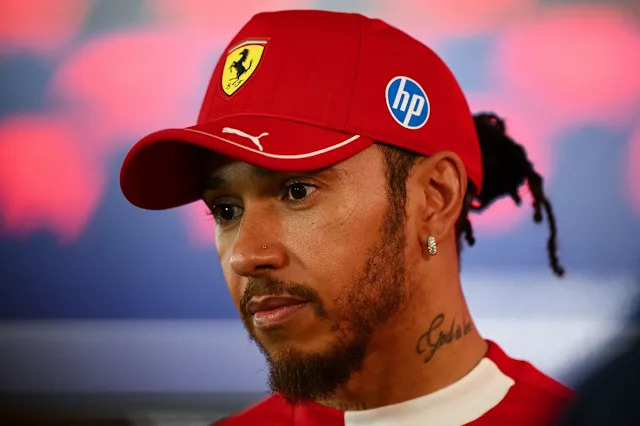
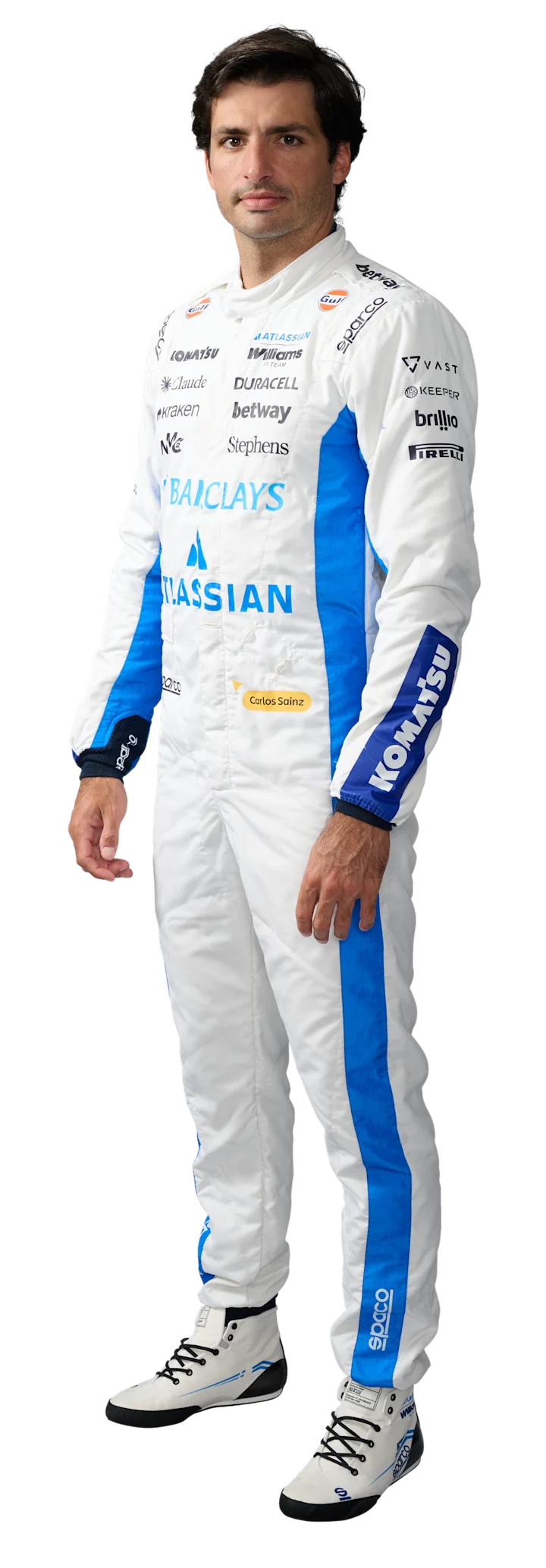
Carlos Sainz is having the worst season of his Formula 1 career. Six points, a best finish of ninth, and a home weekend in Barcelona where he qualified 16th and was lapped twice by race winner Lewis Hamilton. So when the Williams driver sat down with Spanish newspaper Mundo Deportivo and floated a plan to tear up how F1 decides its champion, it was easy to file it under frustration. The drivers and writers who have looked closely at it think that reading is too lazy.
Sainz has raced for five teams — Toro Rosso, Renault, McLaren, Ferrari and now Williams — more than almost anyone on the current grid. That CV is the whole point of his proposal: a 20-race season in which no driver stays in the same car for more than two rounds.
"I have a somewhat crazy idea that I don't think I've ever talked about publicly," Sainz told Mundo Deportivo. "I've always imagined an F1 where teams and drivers are separated."
The two championships would survive, but they would be pulled fully apart. Drivers would bank points wherever they happened to be sitting that weekend; constructors would score from whichever driver rotated into their garage.
"In that case, the driver would be part of F1, not a team," Sainz explained. "He would be an F1 client, hired by F1 to drive the cars. So, I'd have the chance to do two races with Williams, two with Mercedes, two with Ferrari, and so on. All drivers would have exactly the same chance of winning the title."
The appeal is obvious for a man stuck in a slow car. "You'd completely disassociate the brands from the drivers," he said. "And that way you'd have a real drivers' championship and a real manufacturers' championship." Sainz did not pretend any of it was realistic, adding flatly: "This will never happen, of course."
Why raise it at all, then? Writing for Read Motorsport, Veerendra Singh argued the idea "cuts to the heart of what F1's drivers' championship actually measures" — whether the trophy rewards the best driver or the best-funded engineering department. It is a question that has dogged the sport for decades, and one Sainz is uniquely placed to ask, given he has spent 2026 watching machinery, not talent, define his Sundays.

GPblog's Kieran Lynch noted the irony underpinning it all: Sainz believes he is enjoying one of his "strongest seasons" behind the wheel despite the championship table saying otherwise. Strip away the Williams and, in his telling, the results would look very different.
The flaw is the one that always sinks driver-rotation fantasies, and MotorBiscuit put its finger on it: the format would take "considerable convincing to get drivers in the best machinery to then race for the teams at the rear of the field." Picture Max Verstappen handed a Sauber for two rounds while a backmarker climbs into his Red Bull. Box office, certainly. A non-starter for any team that has spent hundreds of millions building a car around one driver, equally certainly.
Sainz knows it lands in the realm of fantasy. But coming from a driver who has sampled five very different cars and is currently trapped in the wrong one, the thought experiment carries more weight than a throwaway line. It asks the question F1 rarely wants to say out loud: in a sport this dependent on machinery, how would we ever really know who the best driver is?
---