IndyCar's next car has turned its first laps, and the two drivers who have been in it are not hiding their enthusiasm.
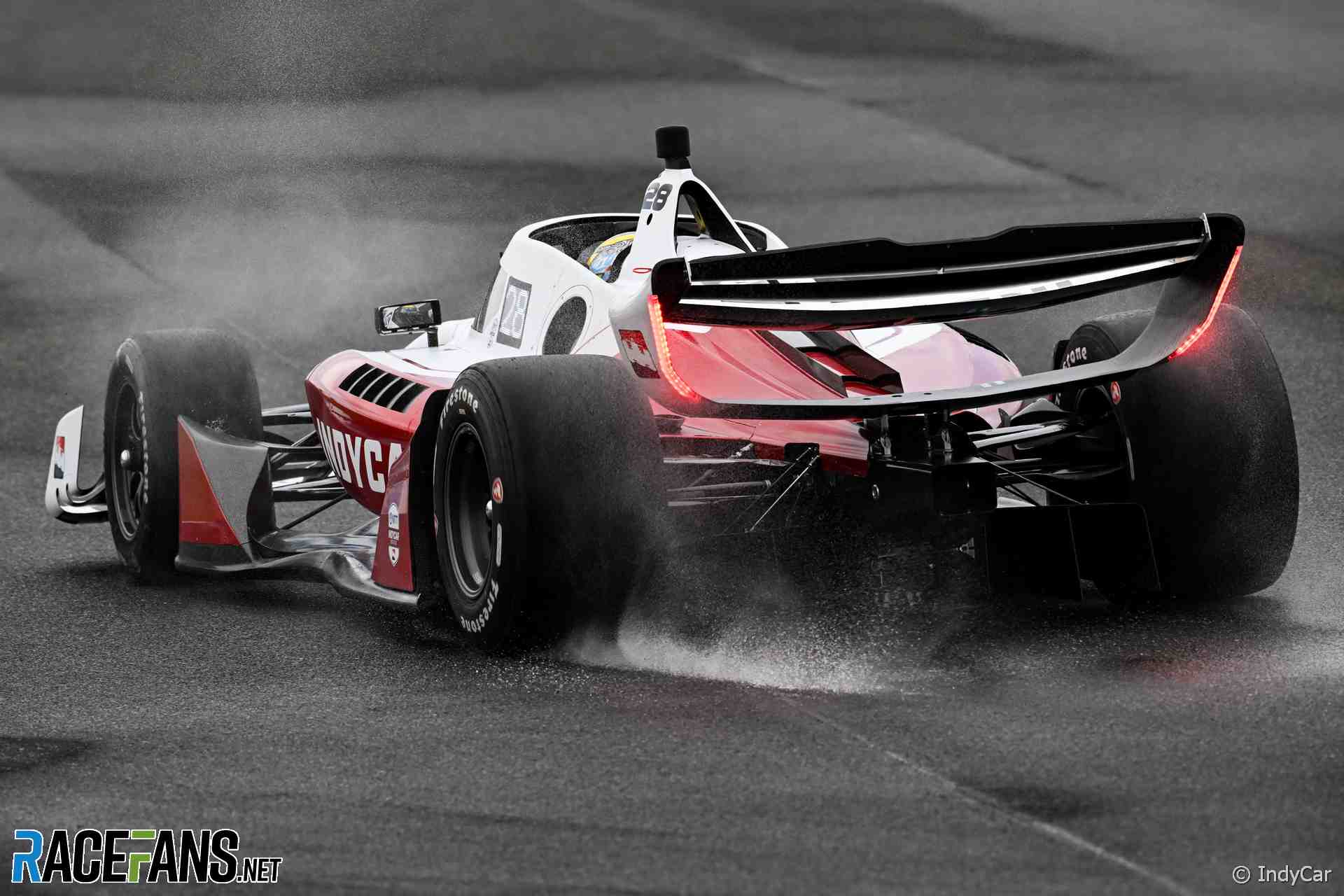
Alexander Rossi ran the Dallara IR-28 for the first time on Saturday at the Indianapolis Motor Speedway road course, the opening validation test for the chassis that arrives in 2028. Alex Palou followed him, rained off on Sunday and limited to a handful of laps on wets, before returning on Tuesday evening for a proper two-hour dry run.
Rossi's headline was less about lap time than about how little went wrong.
"I've been a part of some new car launches before, and I can't say that any have gone as smooth as this one has," he said. "That's down to everyone involved. We've all been waiting for this for a long time. [...] It's like Christmas morning."
Damp conditions limited the comparison work, but the 2016 Indianapolis 500 winner said the day did what it needed to. "It's hard to do a full comparison because of the conditions we were dealing with, but everything you could hope for from a day like today was accomplished. The fact that the car is completely new and the only real issue we had was replacing one sensor is phenomenal."
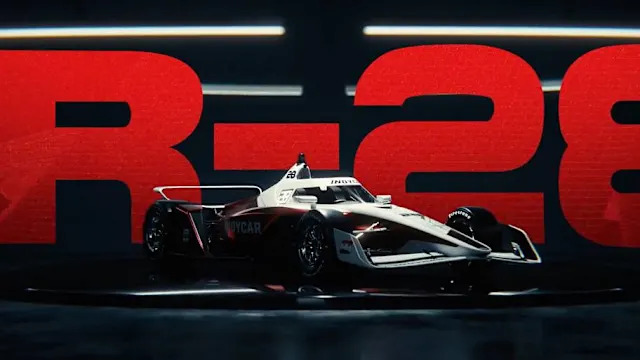
He was equally struck by the car in the flesh. "Aesthetically, it ticks every box you could hope for. I was blown away the first time I saw it. The pictures don't do it justice. [...] It looks aggressive, and even with a completely new chassis, new aerodynamics, new electronics and a spec damper package, the baseline was very comfortable from the get-go."
Palou's dry running gave engineers the data the weekend had denied them. The four-time champion, who leads the 2026 standings by 83 points heading into Portland, found the IR-28 familiar and better at the same time.
"The new car is awesome," Palou said. "It basically feels like the current car, but it's built better. Everything just feels refined. When you lean on it, all the shifts, everything just feels really good."
He described more grip without needing a qualifying simulation to find it. "It feels like more downforce, or at least more efficient downforce. The basics already feel a lot nicer than what we have now."
The bigger surprise was how different it felt given how similar it looks. "Honestly, it already surpassed my expectations," he said. "When you look at it, it's very similar to our current car, but it actually feels a lot different. It feels like a completely different new car, which is great. I didn't expect that, so I'm already happy."
Palou also admitted the test discipline did not come naturally. "It's tough. As a driver, I come with the mindset of not pushing at all and just trying to give feedback and be relaxed. Then I go one lap and I can give a bit more and by the end, I can go full push. I like to push."
"At Indy, weight is king, and at 100 pounds lighter it's going to be faster," O'Gara said. "Weight distribution is going to be better, too, and that also helps cars go faster. As the current car has gotten heavier over the years, much of that weight goes to the rear axle and that makes the car unstable. When there's a lot of weight behind you, it's like pulling a trailer and then hitting the brakes."
The car also targets IndyCar's most persistent complaint: following. New aerodynamic surfaces behind the front wheels are aimed at the wake that punishes trailing cars on ovals.
"Right now, the aero wash behind the front wheels is super wide, and it's really dirty air," O'Gara said. "Look, the air is the air, and it's got to go somewhere, but what's being done is cleaning that air up, controlling it to make the wake less turbulent. In theory, drivers are going to be able to follow closer and when they pop out, they're not going to get stuck there."
A new damper concept adds centre inerters linking the front pair and the rear pair, controlling how quickly the car changes pitch. IndyCar will be the only major championship permitting both front and rear third-element inertance systems.
Power comes from a 2.4-litre twin-turbo V6 producing up to 760 horsepower at the outset, with Chevrolet and Honda both committed.
Palou, for his part, would take it now. "I'm very happy to announce that we'll race it next year," he joked. "I wish. That's the level of excitement everybody has. When we saw it in person for the first time, I was shocked by how good it looked. The renders didn't really do it justice. It looks like a big animal."
---
*Originally published on [Motorsports Global](https://motorsports.global/article/rossi-and-palou-deliver-first-verdicts-on-indycars-ir-28). Visit for full coverage.*