
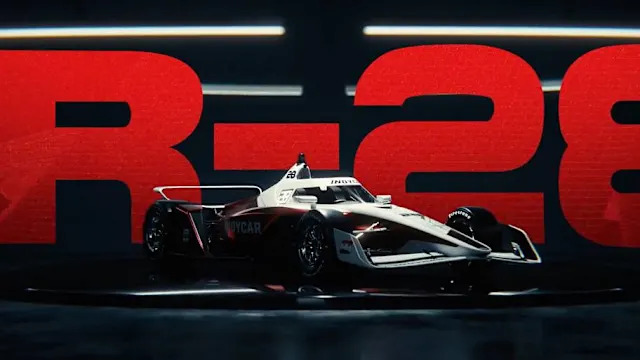
IndyCar has finally shown the car that ends the Dallara DW12 era. The IR-28, unveiled on Tuesday in a rendering video narrated by Matt Damon, will race from the start of the 2028 season and represents the first ground-up chassis change the series has made since 2012.
The headline numbers are simple. The car weighs roughly 100 pounds less than the current machine and will be powered by the previously announced 2.4-litre twin-turbocharged V6 producing up to 760 horsepower. Combined, IndyCar says that power-to-weight shift puts the one-lap and four-lap Indianapolis Motor Speedway qualifying records — set by Arie Luyendyk in 1996 and untouched for three decades — within reach.
"We are pleased to unveil renderings of the new NTT INDYCAR SERIES chassis that will take our sport into an exciting new era," INDYCAR President J. Douglas Boles said. "With initial testing to begin this week, there is still plenty of work to do before 2028, but we are well on our way to showcasing a new era of INDYCAR, which will include enhanced wheel-to-wheel competition, track records, standards in raceability and new benchmarks in safety."

The more interesting engineering claim sits underneath the styling. IndyCar says the IR-28's aerodynamic architecture is the first it has purpose-built to manage the wake from front to back — an explicit attempt to cut the dirty air that punishes a following car. Outwash is reduced, the superspeedway front wing is designed to be more aerodynamically stable, and the aeroscreen is now integrated into the chassis rather than bolted over it.
Dallara keeps the contract it has held since 2012. "We are honored that INDYCAR has chosen Dallara once again," Dallara USA Chief Executive Officer Stefano dePonti said. "After more than a decade of partnership, their continued trust is the greatest recognition of our team's efforts."
Chevrolet, which has taken 16 manufacturer titles and 13 Indianapolis 500 wins in the current formula, is staying. "This new car builds on more than a decade of collaboration with INDYCAR, and we're confident the new 2.4-liter, twin-turbo V6 engine will deliver the performance, sound and excitement INDYCAR fans expect from Team Chevy," GM Vice President of Global Motorsports Competition Eric Warren said.
Paddock reaction, gathered by IndyCar after drivers saw and sat in the car, was near-unanimously positive — though for different reasons.
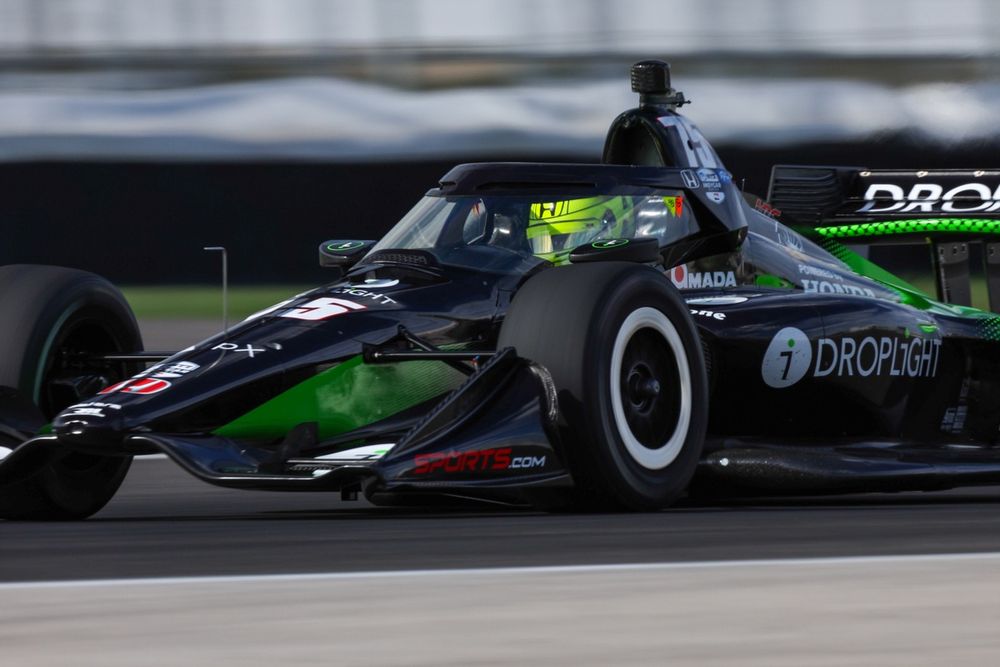
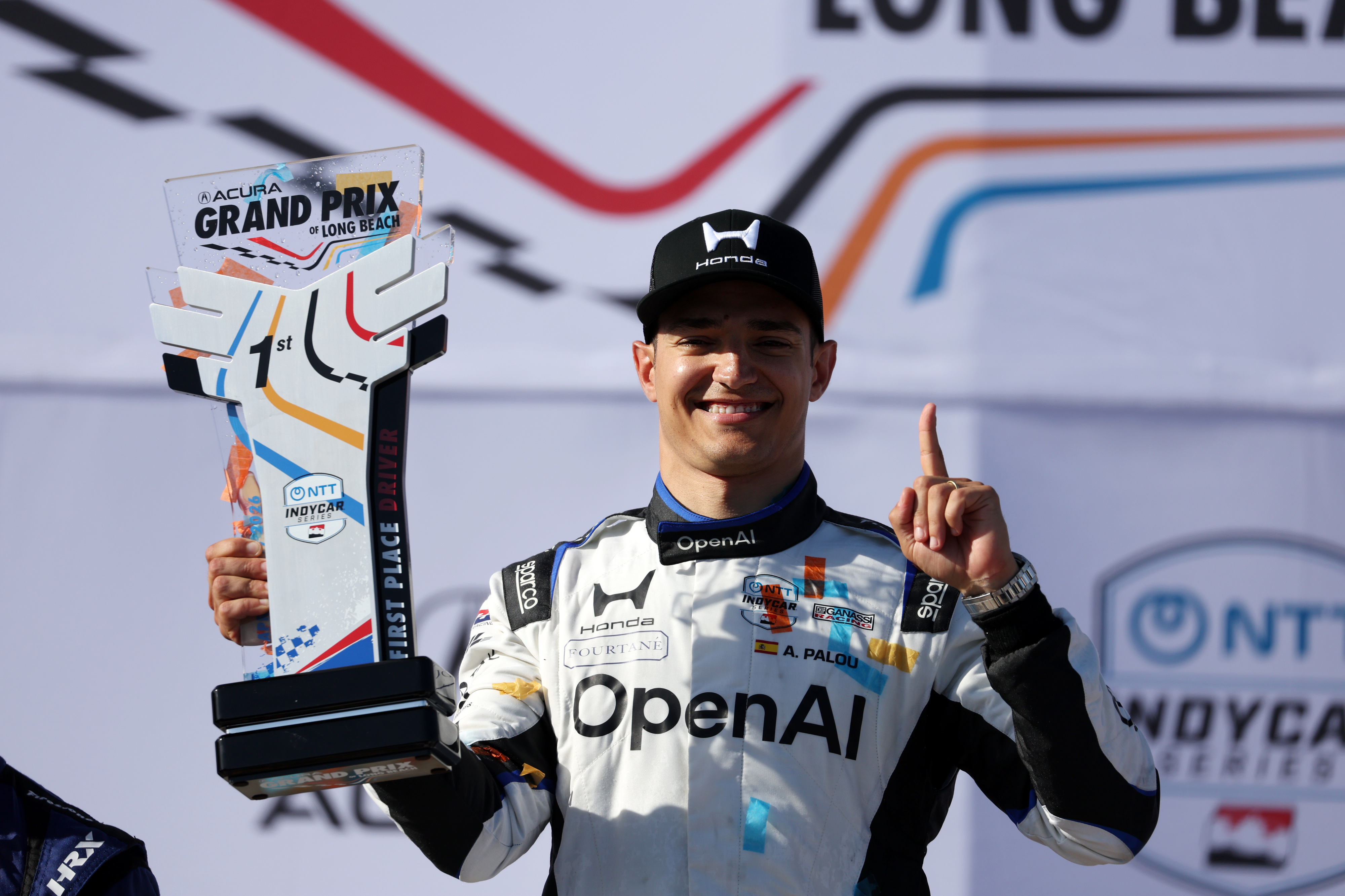
Championship leader Alex Palou framed it as evolution rather than revolution. "The design is super cool and feels like a proper next step for the series while still looking like an INDYCAR SERIES car," the Chip Ganassi Racing driver said. "The most important thing is that we keep the close, fun racing that makes INDYCAR special, and from what I've seen, we're heading in a really good direction."
Jack Harvey went straight to the racing question. "Aerodynamically, everything I hear from Dallara is that they are trying to minimize the effect of dirty air so that we can race even closer," the Dreyer & Reinbold driver said. "Even if it's a half-a-wing of clean air, it will make a huge difference."
Graham Rahal, who was used as the tall driver for the seat fit and cockpit sizing, raised the commercial angle nobody else did. "One of our goals should be to attract another manufacturer into the sport, and I hope this new footprint allows for that," he said.
Alexander Rossi was the most measured. "There are still a lot of things to work through in terms of on-track testing and how it reacts to the different types of environments it will be exposed to, but from a visual standpoint, it's incredible," the ECR driver said.
Perhaps the loudest endorsement came from a driver who no longer races. "What a sight. I sat in the car and, in the past three years, I haven't had the itch to drive again as much as I did sitting in it," Arrow McLaren Team Principal Tony Kanaan said. "Aerodynamically, it looks a lot quicker — and if it looks quicker, it's going to be quicker."
Other details include electronically controlled driver-adjustable anti-roll bars replacing cockpit knobs and levers, a new AXIS inertance-based suspension platform with front and rear third-element systems, a digital car-position display and a transparent window in the engine cover to show manufacturer branding.
Testing begins this week. The IR-28 races for the first time in early 2028.
---