
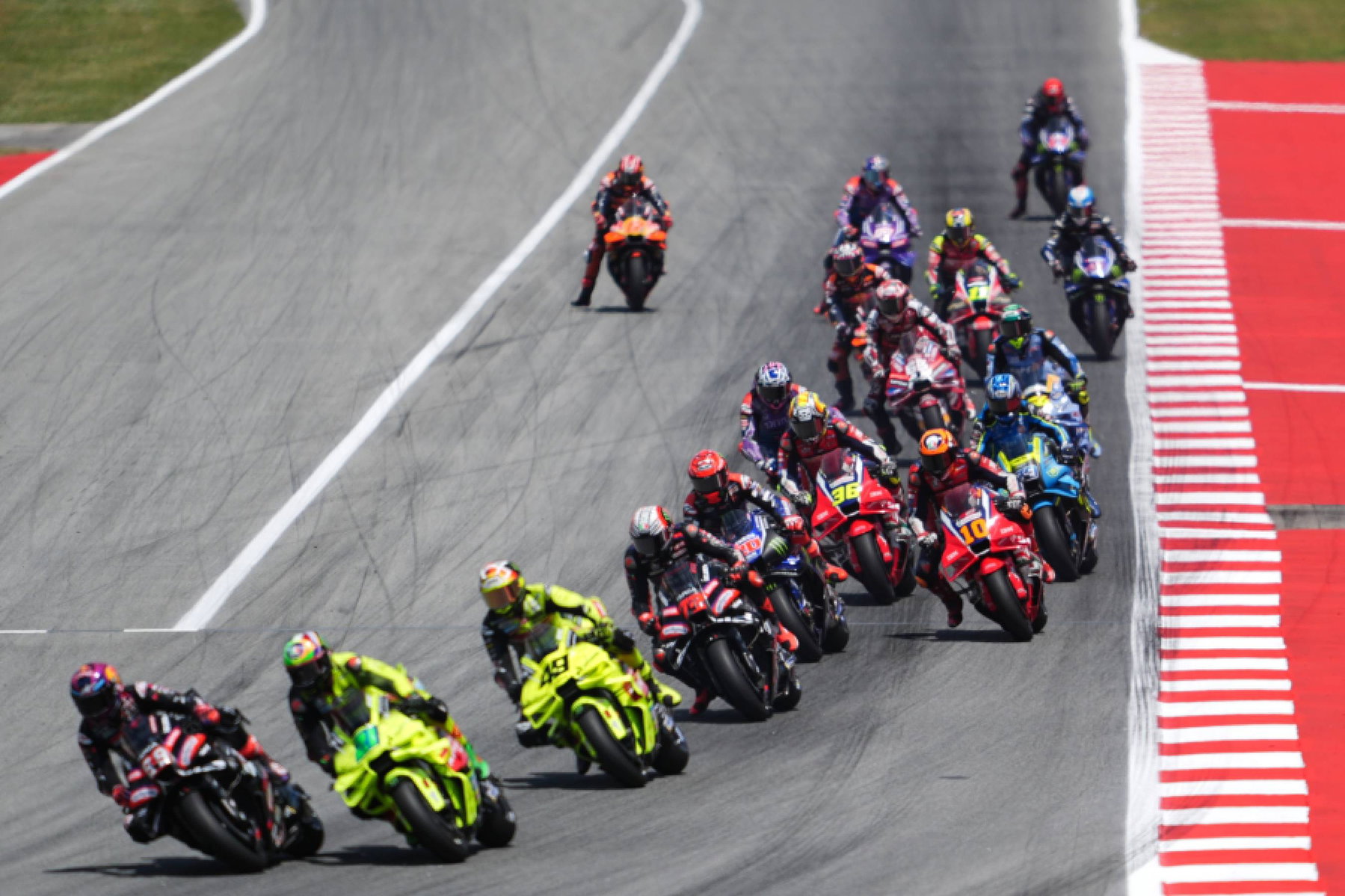
MotoGP's most argued-over technical rule is going nowhere. Pirelli, which takes over from Michelin as the championship's control tyre supplier in 2027, has confirmed it will keep the minimum front tyre-pressure regulation — the rule that has repeatedly rewritten race results hours after the chequered flag through time penalties.
The rule requires riders to keep front pressure above 1.80 bar, and the rear above 1.68 bar, for at least 60 percent of a full grand prix and 30 percent of a sprint. Breaching it brings a 16-second penalty in a grand prix and eight seconds in a sprint — enough to turn a podium into a midfield finish.
Its impact was laid bare at this year's Catalan Grand Prix, where five riders — Joan Mir, Raul Fernandez, Alex Rins, Jack Miller and Toprak Razgatlioglu — were hit with 16-second penalties for running fractionally under the limit. Mir was demoted from second to 13th. Francesco Bagnaia, initially caught up in the investigation, was cleared after stewards accepted his pressure loss came from a leaking rim, and inherited third.
Mir, whose front pressure was measured 0.004 bar below the minimum, questioned the severity. "The only thing that was strange for me was the penalty, because we made like a Sprint race, and I got the penalty of a long race!" he said, arguing the field had bunched up after two restarts. "I didn't gain 16 seconds, and it doesn't make sense to receive the highest penalty in a short race."
Many in the paddock assumed the arrival of a new supplier would sweep the rule away. Pirelli's racing director Giorgio Barbier says that was never on the table. "We always said that we were going to keep it. I don't know where the opposite came from," he said.
Barbier traced the underlying problem — front tyres overheating when a rider runs in close, turbulent air — to the bikes themselves rather than the rubber. "Where does this overheating of the front tyres come from? Probably from aerodynamics," he said. He argued Pirelli's construction should cope better, describing a wider operating window in which tyre behaviour changes less as pressure rises or falls.
Even so, he stopped short of promising the penalties will disappear. "I cannot state that Pirelli will not have this problem at all," Barbier said, adding that the company would keep the regulation "while hoping that we do not have to apply it." He pointed to the years of safety data behind Michelin's original limit and said Pirelli needs real MotoGP running before it can justify loosening anything — while conceding that stripping riders of podiums long after the race is not good for the sport.
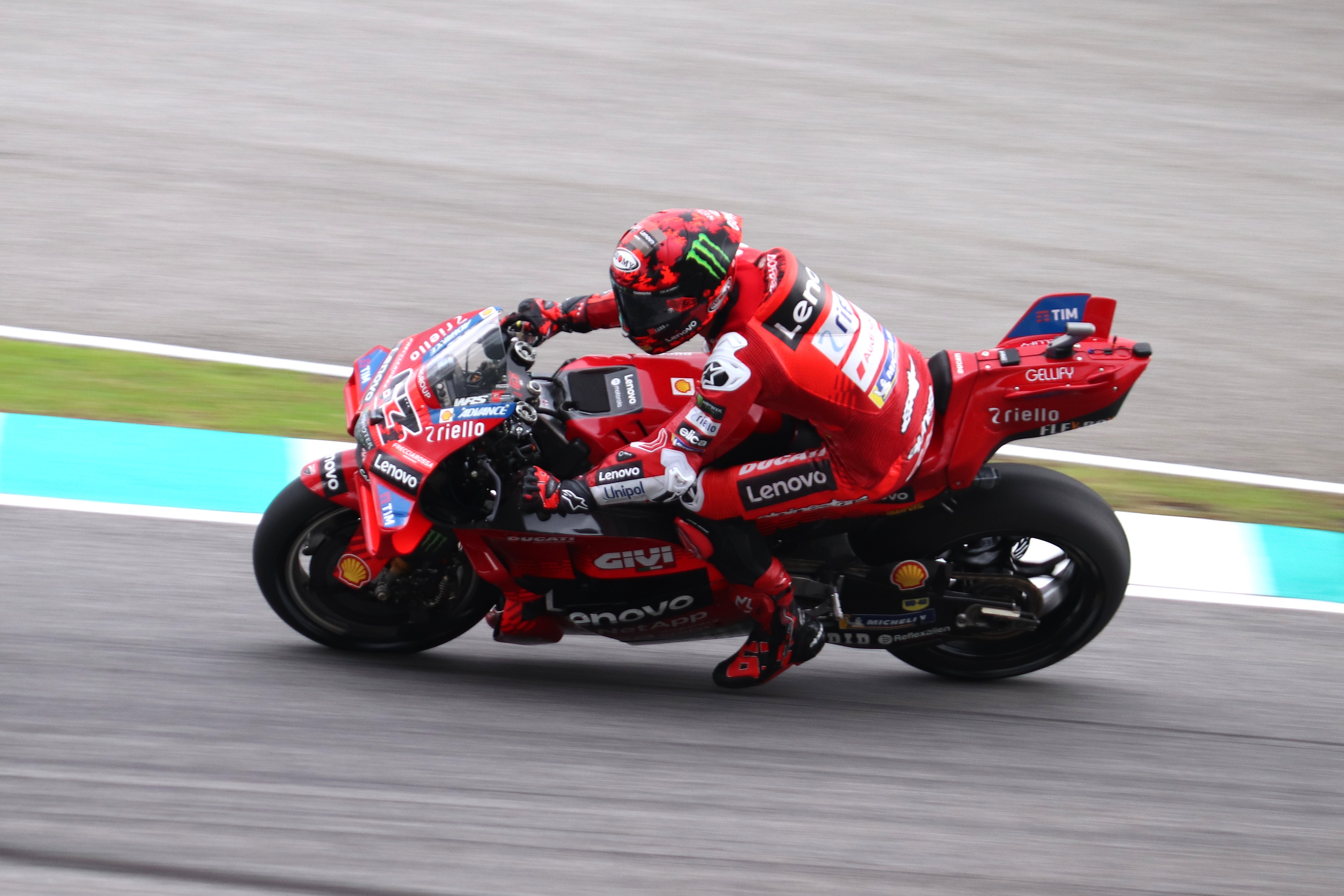
The rule carries over into a season of upheaval. MotoGP switches to 850cc engines in 2027, and every manufacturer resets to the same concession tier at the start of that campaign before mid-season results begin to separate them again. For now, the pressure gauge stays exactly where the riders least want it.
---