
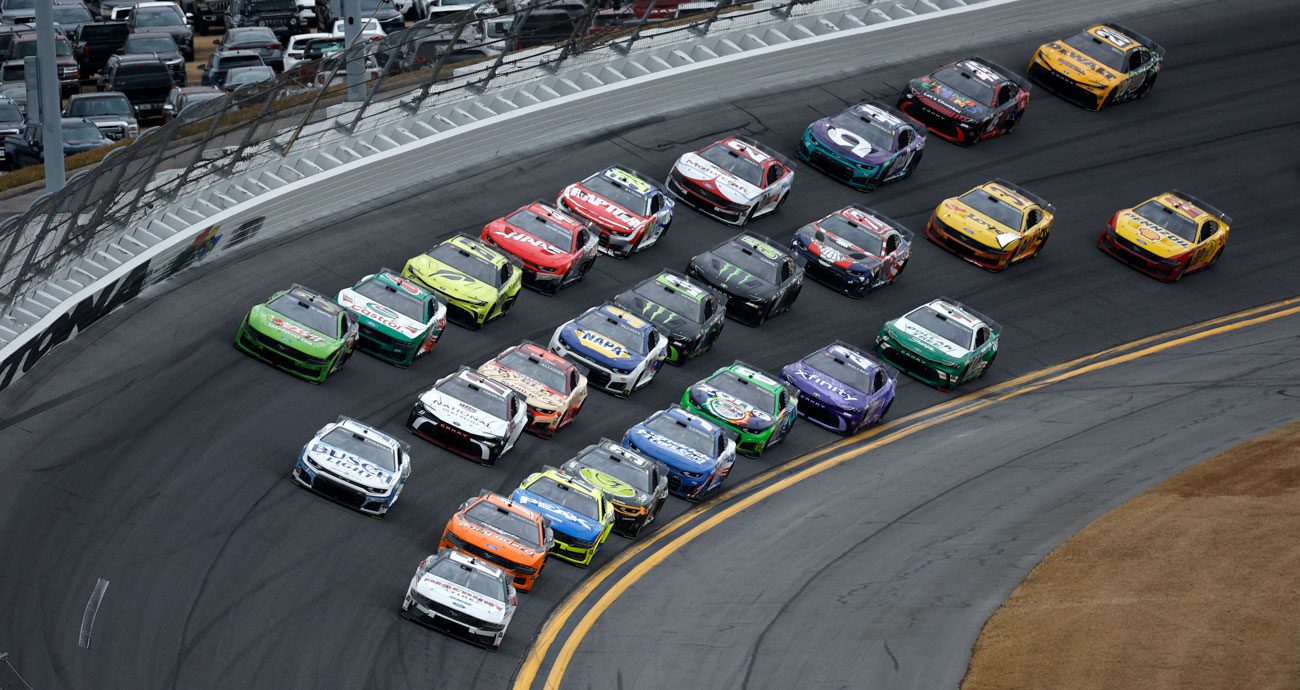
NASCAR will hand its Cup drivers a radically different car for the Coke Zero Sugar 400 at Daytona on August 29, cutting both horsepower and rear downforce in a bid to end the fuel-saving processions that have come to define superspeedway racing.
The changes are significant. The rear spoiler drops from seven inches to four, matching the low-drag specification used at intermediate tracks, while engine output falls from 510 horsepower to 465 through a smaller tapered spacer — 0.84 inches in place of 0.89. NASCAR is also revising the transaxle drop-gear ratio to sharpen acceleration when a driver pulls out of line to pass. The headline number leaves a Cup car making less power than a road-going Ford Mustang GT.
The goal is not raw speed. Single-car runs are expected to be around three miles per hour quicker, but pack speeds should stay broadly where they are. What NASCAR wants is racing that rewards aggression rather than restraint.
Denny Hamlin, a three-time Daytona 500 winner, helped shape the package alongside NASCAR Event Management president John Probst and former crew chief Steve Letarte. Hamlin framed the target in blunt terms.
"What we're essentially trying to recreate is Atlanta at Daytona and Talladega," he said, pointing to the way Atlanta's worn, lower-grip surface naturally spreads cars out without forcing drivers to lift and save fuel. "From the numbers that I've seen, it's going to be roughly a 33% gain in the right direction."
Letarte put the current problem plainly. "When I watch superspeedway racing currently, it seems like the leader is basically at terminal velocity," he said — a car out front with no way to break away and little incentive to try.
The technical logic runs against intuition. Cutting power lets NASCAR trim the aerodynamic drag and downforce it had piled on to compensate for the spec engine, returning the cars closer to an earlier superspeedway feel. The telling figure is the gap between a lone car and the draft: around nine miles per hour back in 2021, more than thirteen this year, and a targeted ten to eleven with the new kit — enough for a run to actually complete a pass rather than stall the moment a driver noses into clear air. NASCAR's Saturday support cars already run roughly 410 horsepower at the big tracks.
Whether the package sticks beyond Daytona has not been decided. NASCAR is treating the Coke Zero Sugar 400 — the regular-season finale, with playoff places on the line — as a live test in front of a full house. If the racing rewards the brave over the frugal, expect it to return.
---