
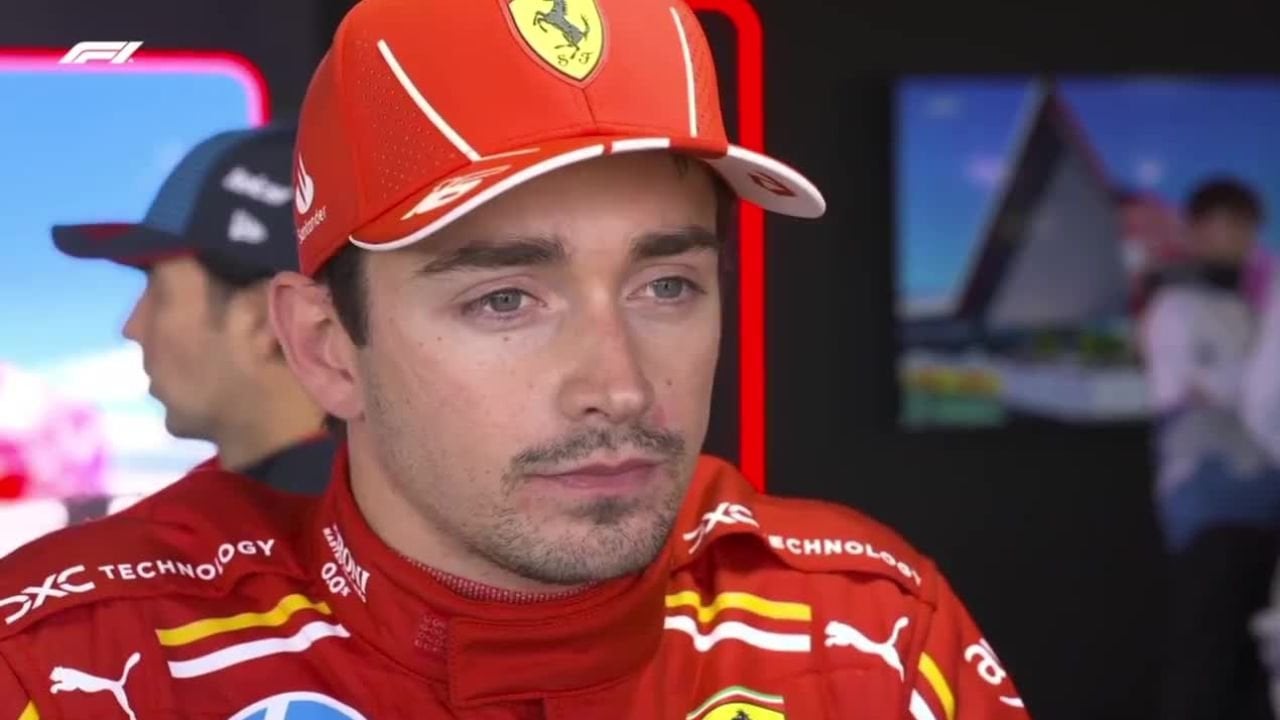
Charles Leclerc walked away from his Monaco crash blaming his brakes, and the days since have turned a single restart shunt into one of the more revealing technical stories of Ferrari's 2026 season. The Monegasque called the moment "borderline dangerous," admitted he "looked like an idiot," and described an impossible situation where, on turn-in, the brakes simply were not there.
Ferrari's brake supplier Brembo pushed back almost immediately, saying it was surprised by the comments and that it was premature to draw conclusions before the data was studied. The picture that has since emerged, pieced together by several technical analysts, is more uncomfortable than a simple component failure: nothing actually broke.
The Race's Jon Noble, who has dug into the affair, argues the root of it lies in the 2026 rules rather than the SF-26 itself. The new 50/50 split between the combustion engine and electrical power means teams harvest as much energy as they can off the rear axle to charge the battery. The consequence is that the rear brake discs do far less work than they used to, run cooler, and can slide out of their operating temperature window. Noble notes the problem first surfaced in a freezing Canada, then was amplified at low-energy Monaco, and behind a safety car the discs simply never fired up.
The channel Track Vision reached a similar conclusion from the onboard footage, pointing out that Leclerc was already braking far earlier than usual and had dropped to first gear at the restart. With the battery full after the safety car period, it suggested, the MGU-K provided no engine braking on the rear axle, so the car carried more speed than Leclerc expected and washed straight into understeer before the front locked. Track Vision flagged that Lance Stroll and, earlier in practice, Fernando Alonso had near-identical moments at the same kind of corner, hardening the case that this is a 2026 trait rather than driver error.
The Ferrari-focused outlet ScuderiaFans framed it as an interaction between the brake-by-wire system and hybrid recovery, with Leclerc reporting that the rear brakes felt absent while the fronts produced close to double their normal bite because they were outside their ideal window. According to that account, Leclerc believes there was nothing he could have done differently even after reviewing the telemetry.
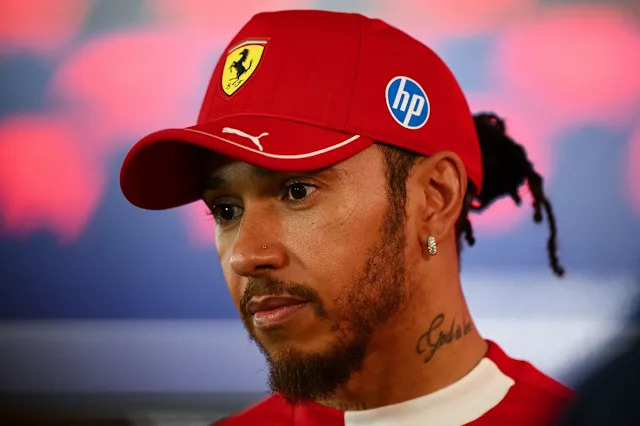
The obvious question is why the same Ferrari has been fine on the other side of the garage. Noble points to two things. Lewis Hamilton's aggressive, late-braking style stamps heat into the discs and keeps them in their window, where Leclerc's smoother, earlier inputs do not. And Hamilton has quietly switched brake disc supplier, moving from Brembo to Carbone Industrie around the Japanese Grand Prix, chasing the stronger initial bite he has always preferred.
That is now the fix on the table. Multiple sources indicate Leclerc intends to adopt Hamilton's specification from the Barcelona weekend onwards, with a longer-term move toward smaller rear discs across the team expected to make them easier to warm up. Noble offers Leclerc one more piece of comfort: the lowest-energy circuits are behind him for a while. Barcelona is a high-energy track in the summer heat, exactly the conditions in which the brakes should behave. Friday practice there will be the first read on whether the most natural braker on the grid has his strongest weapon back.
---
*Originally published on [News Formula One](https://newsformula.one/article/leclercs-brake-nightmare-why-hamilton-already-has-the-fix). Visit for full coverage.*